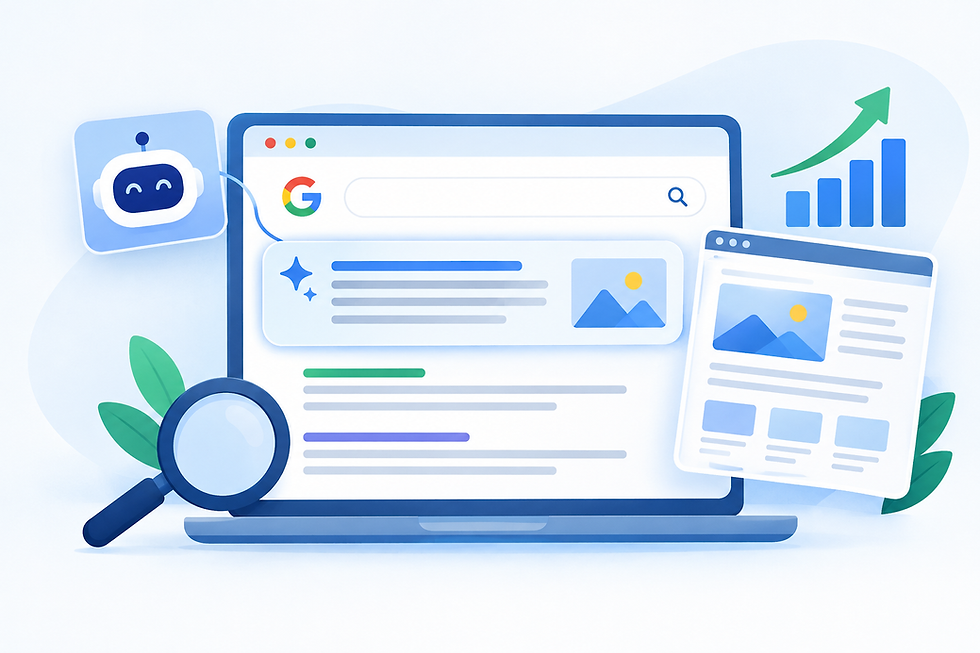
How GEO Is Changing the Future of Search Engine Optimization


The way people search for information online is changing rapidly. For years, traditional Search Engine Optimization (SEO) focused on helping websites rank higher on search engine results pages by targeting keywords, building backlinks, and creating valuable content. While these strategies remain important, the rise of artificial intelligence has introduced a new approach known as Generative Engine Optimization (GEO).
AI-powered search platforms are transforming how users find answers. Instead of displaying only a list of web pages, generative search engines provide direct, conversational responses by gathering information from multiple trusted sources. This shift means businesses must rethink how they create and optimize content to remain visible.
For every digital marketing company in Vizag, understanding GEO is becoming essential. Businesses that adapt early can improve their online visibility, establish authority, and stay ahead in an increasingly AI-driven search environment.
What Is Generative Engine Optimization (GEO)?
Generative Engine Optimization is the process of optimizing digital content so that AI-powered search engines and generative search tools can easily understand, reference, and include it in their responses.
Unlike traditional SEO, which mainly aims to improve rankings on search engine results pages, GEO focuses on making content useful enough for AI systems to summarize, recommend, and cite while answering user queries.
AI search engines analyze factors such as:
Content accuracy and reliability
Topic relevance
Contextual understanding
Content structure
Authority of the source
User intent satisfaction
Instead of optimizing only for keywords, GEO encourages businesses to create comprehensive, trustworthy, and user-focused content.
How AI Is Transforming Search
Search engines have evolved significantly over the past decade. Earlier, users searched with short phrases such as "best restaurants" or "SEO tips." Today, users ask complete questions like:
"What is the best SEO strategy for small businesses in 2026?"
AI-powered search engines understand conversational language and provide direct answers rather than simply listing websites.
This transformation means websites need to focus more on solving user problems than merely targeting search phrases.
Content that answers questions naturally, provides detailed explanations, and demonstrates expertise is more likely to appear in AI-generated responses.
GEO vs Traditional SEO
Although GEO and SEO work together, they have different objectives.
Traditional SEO focuses on improving rankings through keyword optimization, backlinks, metadata, technical SEO, and page speed.
GEO goes beyond rankings by emphasizing content quality, context, credibility, and semantic understanding. AI systems evaluate whether content genuinely answers a user's question instead of simply checking keyword frequency.
Businesses should not replace SEO with GEO. Instead, they should combine both strategies to maximize visibility across traditional and AI-powered search experiences.
Why GEO Matters for Businesses
Generative AI is becoming a major source of information for consumers. Whether users are researching products, comparing services, or seeking expert advice, AI search tools increasingly influence their decisions.
Businesses that optimize for GEO gain several advantages.
First, they increase their chances of appearing in AI-generated responses.
Second, they establish stronger brand authority by publishing reliable and informative content.
Third, they improve user engagement because helpful content builds trust.
Finally, GEO supports long-term digital growth as AI search continues to expand.
Every digital marketing company in Vizag should begin preparing for this shift to help clients maintain strong online visibility.
Content Quality Is More Important Than Ever
One of the biggest changes introduced by GEO is the growing importance of content quality.
AI search engines prefer content that is:
Accurate
Well-researched
Easy to understand
Updated regularly
Supported by credible information
Instead of creating multiple short articles targeting similar keywords, businesses should publish comprehensive resources that answer user questions completely.
High-quality content naturally attracts backlinks, shares, and engagement, making it beneficial for both traditional SEO and GEO.
Understanding Search Intent
Search intent remains one of the most important ranking factors.
Users search with different intentions. Some want information, while others want to compare products or make purchases.
GEO encourages businesses to understand these intentions more deeply.
For example, someone searching for "How does GEO improve SEO?" expects a detailed explanation rather than a sales pitch.
Creating content that matches user intent increases the likelihood that AI systems will consider it valuable enough to reference.
The Role of Structured Content
AI models process well-organized content more effectively.
Clear headings, logical sections, concise paragraphs, and descriptive subheadings improve readability for both users and AI systems.
Businesses should organize articles using proper H2 and H3 headings while maintaining a natural content flow.
Well-structured content also improves user experience, leading to longer engagement and better search performance.
Building Authority Through Expertise
Authority has always been important in SEO, but GEO makes it even more valuable.
AI search engines prioritize content from trustworthy sources that consistently publish accurate information.
Businesses can strengthen authority by:
Publishing expert insights
Updating content regularly
Using reliable statistics
Answering industry-specific questions
Demonstrating real experience
Over time, consistent publishing helps establish credibility within a particular niche.
The Importance of Conversational Content
People now interact with AI assistants as if they were speaking to another person.
This shift means businesses should write content in a natural, conversational tone while maintaining professionalism.
Instead of forcing keywords repeatedly, content should flow naturally and answer questions directly.
For example, rather than writing:
"SEO services digital marketing company in Vizag best SEO company."
A better approach is:
"Choosing the right digital marketing company in Vizag can help businesses implement effective SEO and GEO strategies for long-term online success."
Natural writing improves both user experience and AI comprehension.
GEO and Local Businesses
Local businesses can benefit significantly from GEO.
AI-powered search increasingly recommends businesses based on relevance, trustworthiness, customer reviews, and local expertise.
Companies should optimize local content by creating informative blogs, maintaining accurate business information, encouraging customer reviews, and publishing location-specific content.
This strategy helps businesses remain competitive as AI-driven local search continues to evolve.
At Leadraft, businesses can combine proven SEO practices with forward-looking GEO strategies to prepare for the next generation of search.
Preparing for the Future
GEO is not replacing SEO—it is expanding it.
Businesses that continue focusing only on keyword rankings may eventually lose visibility as AI-generated answers become more common.
The future belongs to websites that provide valuable information, demonstrate expertise, and answer users' questions comprehensively.
Companies that invest in quality content today will be better positioned for tomorrow's AI-powered search landscape.
For every digital marketing company in Vizag, adapting to GEO represents an opportunity to deliver stronger results, build lasting authority, and help clients stay competitive in an increasingly intelligent digital ecosystem.
Generative Engine Optimization represents the next evolution of search marketing. As AI continues to reshape how people access information, businesses must move beyond traditional keyword-focused strategies and prioritize content that is accurate, relevant, and genuinely helpful.
Rather than viewing GEO as a replacement for SEO, organizations should embrace it as a complementary approach. By combining technical SEO with authoritative, user-focused content, businesses can improve their visibility across both conventional search engines and AI-powered search experiences.
Those who start implementing GEO today will be better prepared for the future of digital marketing and better equipped to connect with audiences wherever they search.
FAQs
1. What is GEO in SEO?
A) Generative Engine Optimization (GEO) is the practice of optimizing content so AI-powered search engines can easily understand, reference, and include it in
their generated answers.
2. Is GEO replacing traditional SEO?
A) No. GEO complements traditional SEO. While SEO focuses on search rankings, GEO emphasizes creating authoritative, context-rich content that AI systems can use in responses.
3. Why is GEO important for businesses?
A) GEO helps businesses increase visibility in AI-generated search results, build credibility, improve user trust, and stay competitive as search technology evolves.
4. How can a digital marketing company in Vizag help with GEO?
A) A digital marketing company in Vizag can develop high-quality content, optimize website structure, improve technical SEO, and implement GEO best practices to enhance visibility across both traditional and AI-powered search platforms.