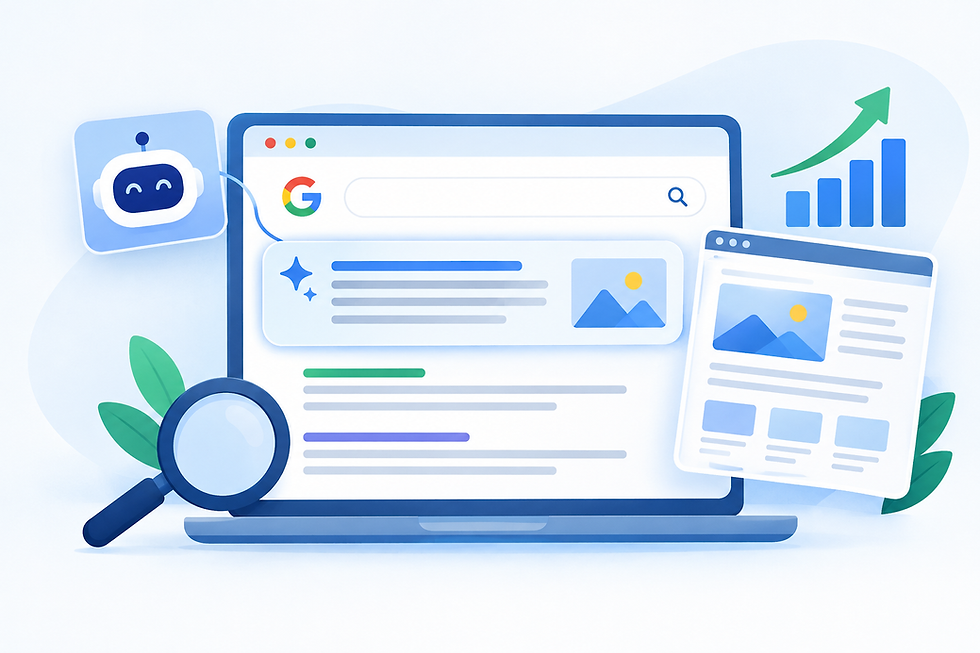
What Is Generative Engine Optimization and Why It Matters


Generative Engine Optimization (GEO) is an emerging digital marketing approach focused on improving how brands appear in AI-generated search results. As people increasingly ask platforms such as ChatGPT, Google AI-powered search experiences, and other generative AI tools for recommendations, answers, products, and services, businesses need to think beyond traditional search engine rankings.
Traditional SEO focuses largely on helping webpages rank prominently in search engine results. GEO focuses on making a brand's information clear, trustworthy, relevant, and easy for AI systems to understand and reference when generating answers.
For businesses competing in a changing search environment, working with a digital marketing company in Vizag can help create a strategy that combines traditional SEO with content and optimization practices designed for AI-driven discovery.
What Is Generative Engine Optimization?
Generative Engine Optimization is the process of improving a brand's online presence so that generative AI systems can better understand, evaluate, and potentially mention the brand in their responses.
When someone asks an AI assistant a question such as "What are the best digital marketing companies in Vizag?" the system may generate an answer based on information it can access and interpret from different online sources.
This creates a new opportunity for businesses. Instead of focusing only on appearing as a blue link in traditional search results, brands can work toward becoming a credible source that AI systems recognize when answering relevant questions.
GEO does not replace SEO. Instead, it expands the way businesses think about online visibility.
How Is GEO Different From Traditional SEO?
SEO and GEO share several foundations, including useful content, strong website
structure, technical quality, authority, and relevance. However, their objectives can differ.
Traditional SEO generally aims to improve rankings for specific keywords and search queries. GEO focuses more heavily on whether a brand can be accurately understood and included within AI-generated answers.
For example, an SEO strategy might target the keyword "digital marketing services in Vizag" and create a detailed service page around it. A GEO-focused strategy may additionally answer related questions such as:
What services does a digital marketing agency provide?
How should a business choose a digital marketing agency?
Which digital marketing strategies work for local businesses?
What should businesses consider when selecting an agency in Vizag?
This broader question-based approach gives AI systems more useful context about the business and its expertise.
Why Is GEO Becoming Important?
Search behavior is changing. Instead of entering several short keywords into a search box, users can now ask detailed questions in natural language.
They may ask an AI assistant to compare services, recommend companies, summarize options, explain a topic, or suggest the best solution for a specific situation.
This means businesses need content that answers complete questions rather than simply repeating keywords.
If your website contains authoritative, well-structured information, it has more opportunities to become part of the information ecosystem used by AI systems.
GEO is therefore becoming an important consideration for businesses that want their brands to remain visible as search continues to evolve.
How Does GEO Work?
There is no single optimization technique that guarantees inclusion in AI-generated responses. Instead, GEO involves several complementary practices.
The first is creating content that clearly answers users' questions. AI systems need understandable information, so vague or excessively promotional content may be less useful than precise, informative material.
The second is building topical authority. A website that consistently publishes valuable information about a specific subject can provide stronger context about its expertise.
The third is maintaining accurate business information across the web. AI systems may encounter information about a company through websites, publications, directories, reviews, social platforms, and other sources.
Consistency across these sources can help reduce confusion and strengthen the overall digital presence of a brand.
Create Content Around Real User Questions
One of the most effective ways to prepare for generative search is to understand what customers actually ask.
Instead of creating separate articles only for individual keywords, businesses can develop comprehensive topic clusters.
For example, a marketing agency could create content covering SEO, PPC, social media marketing, content marketing, local SEO, AI search, analytics, and digital strategy.
Each topic can then answer specific questions users may ask.
This approach can help demonstrate expertise while making content easier for both users and search technologies to interpret.
Build Strong Topical Authority
AI visibility is not generally achieved through one article. A consistent body of high-quality content can provide much stronger signals about a company's expertise.
Suppose a business wants to be recognized for SEO. Publishing one article about SEO may have limited impact. Publishing a well-connected collection covering keyword research, technical SEO, local SEO, content strategy, Core Web Vitals, link building, analytics, and AI search creates much greater topical depth.
Internal linking between related pages can also help users navigate the website while providing clearer relationships between topics.
Keep Business Information Consistent
Businesses should ensure that their name, services, location, contact details, and descriptions are accurate across important online platforms.
For a local company, this is particularly important.
A business may have information on its website, Google Business Profile, social media accounts, business directories, review platforms, and industry websites. Major inconsistencies can make the overall online identity less clear.
Consistent information supports local SEO while also creating a stronger foundation for AI-driven discovery.
Earn Mentions From Trusted Sources
Third-party mentions can contribute to a brand's overall online authority.
Relevant editorial coverage, industry publications, expert contributions, interviews, partnerships, reviews, and reputable business listings can all strengthen a brand's presence.
The goal should not be to create hundreds of artificial links or mentions. Instead, businesses should focus on earning relevant references from credible sources.
For example, Leadraft can build authority by publishing useful marketing insights, contributing expertise to industry discussions, and developing content that provides genuine value to businesses.
Make Content Easy to Understand
AI systems process large amounts of information. Clear content structure can make important information easier to identify.
Use descriptive headings, concise paragraphs, direct answers, relevant examples, FAQs, and logical internal links.
Instead of writing complicated introductions, answer the primary question early and then provide supporting details.
For example, an article about local SEO should clearly explain what local SEO is, why it matters, how it works, and what businesses can do to improve their visibility.
This structure benefits human readers as well as search technologies.
GEO and Local Businesses
GEO can be particularly valuable for local businesses because customers increasingly use conversational searches to find nearby products and services.
A user might ask, "Which digital marketing company in Vizag is suitable for a small business?" or "What should I look for when hiring an SEO agency in Visakhapatnam?"
Businesses can prepare for these searches by publishing location-specific, genuinely useful content.
Local case studies, service pages, FAQs, business information, customer reviews, and educational articles can all contribute to a stronger local digital presence.
Does GEO Replace SEO?
No. SEO remains an essential part of digital visibility.
Search engines still generate traditional results, and websites need strong technical foundations, useful content, relevant keywords, good user experience, and authoritative signals.
GEO should be viewed as an extension of modern search optimization rather than a replacement for SEO.
A strong strategy combines traditional search optimization with content that is structured for conversational and AI-driven discovery.
How Can Businesses Start With GEO?
Businesses can begin by auditing their existing content and asking whether it clearly answers the questions customers are likely to ask.
Review important pages for accuracy, update outdated information, strengthen internal linking, create useful FAQ content, and build topic clusters around important services.
It is also useful to monitor how AI platforms describe your brand and competitors. This can reveal gaps in your online presence and identify topics that deserve better coverage.
Most importantly, businesses should focus on building genuine authority rather than trying to manipulate AI-generated results.
The Future of Generative Engine Optimization
Search will continue becoming more conversational, personalized, and AI-driven. Users may increasingly expect direct answers rather than lists of links.
This shift creates a major opportunity for brands that consistently publish accurate and useful information.
GEO is not about chasing a particular AI platform or finding a shortcut to appear in every generated response. It is about creating a strong digital ecosystem where your brand is clearly represented, consistently discussed, and supported by useful information.
Businesses that combine SEO fundamentals with high-quality content, topical authority, strong local visibility, and credible online mentions will be better positioned for the changing search landscape.
FAQs
1. What is Generative Engine Optimization?
A) Generative Engine Optimization is the process of improving a brand's online presence so AI-powered search and answer systems can better understand and potentially reference its information in generated responses.
2. Is GEO the same as SEO?
A) No. SEO focuses primarily on improving visibility in traditional search results, while GEO focuses on visibility within AI-generated answers. Both approaches can work
together.
3. How can a business improve its GEO strategy?
A) Businesses can create helpful question-based content, build topical authority, maintain consistent business information, improve website structure, and earn relevant mentions from trustworthy sources.
4. Does GEO guarantee that a brand will appear in ChatGPT or other AI tools?
A) No. There is no guaranteed method for controlling AI-generated answers. GEO focuses on strengthening the quality, relevance, authority, and clarity of a brand's online information.